
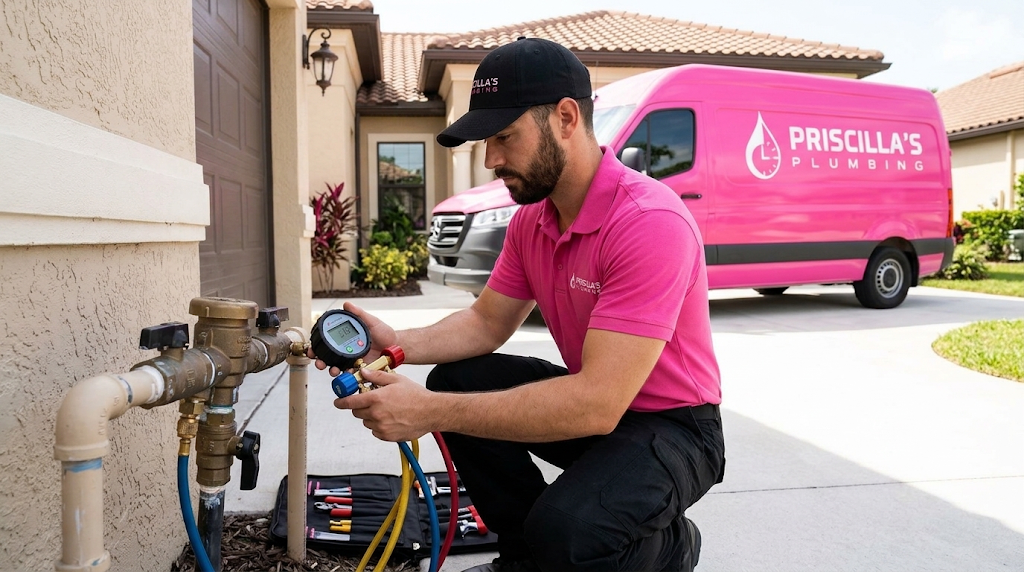
You turn on your shower, and the water comes out weak. Your sprinklers barely reach the lawn. Your home has a backflow prevention (https://priscillaplumbing.com/services/backflow-prevention )device near your meter or yard, and you suspect the device steals your pressure. You are partly right.
A backflow preventer lowers your water pressure by design. A normal drop is small. A large drop points to a problem inside the device or the pipes around the device. Low pressure wastes your time, slows your laundry, and leaves your yard dry in the Florida heat. A hidden problem also grows worse over time.
Let us explain to you the normal drop, the signs of a real problem, and the steps to fix your pressure.
Does a Backflow Prevention Device Reduce Water Pressure?
Yes. A low water pressure after a backflow installation happens by design.
The device uses check valves to stop water from flowing backward. Springs help hold those valves in place. Water needs enough pressure to move through the valves and continue into your home.
This creates a pressure drop between the inlet and outlet.
A double check valve assembly often has a lower pressure loss than a reduced pressure zone, or RPZ, device. An RPZ has extra parts, including a relief valve, so the pressure loss often runs higher.
For many common systems, a pressure drop of about 3 to 15 psi falls within a normal range. A typical range is 3 to 15 psi, while other industry guidance lists higher losses for some RPZ systems based on flow rate, size, and model.
Your exact pressure loss depends on the model, pipe size, flow rate, and water demand. Always check the manufacturer's pressure loss data for your specific device.
How Much Pressure Should You Lose?
A small drop after water passes through a backflow preventer does not always signal a problem.
For example, a double check valve assembly might lose around 6 to 9 psi under common conditions. A reduced backflow preventer pressure loss is around 9 to 14 psi. These figures vary by model and flow rate.
Water flow also affects pressure loss. Higher flow through a backflow assembly often creates more pressure loss. A device that works well with one faucet open might show a larger drop when several fixtures run at once.
So, a small pressure change after installation might be expected.
A sudden change is different.
If your shower suddenly feels weak, your faucets slow down, or several fixtures lose pressure at the same time, your backflow assembly needs inspection.
What Causes Excessive Pressure Loss?
A backflow preventer should not leave your home with poor water pressure. When pressure drops much more than expected, there must be a specific plumbing problem. If you notice reduced pressure at the zone assembly, look for these five problems.
1. Dirt and Sediment Inside the Device
Rust, sand, minerals, and other debris might collect inside the backflow assembly.
A dirty strainer or check valve restricts water flow. As the opening gets smaller, your home receives less pressure.
South Florida plumbing systems also deal with outdoor conditions such as humidity and coastal exposure. Priscilla’s Plumbing notes corrosion and seal wear as concerns for outdoor backflow assemblies in the area.
2. A Worn Check Valve
A check valve needs to open and close correctly.
A worn seal or sticking valve affects water flow. A damaged valve might also leak or fail during a backflow test.
Do not assume a failing valve needs a full replacement. A trained plumber should test the assembly first and identify the damaged part.
3. A Partly Closed Shutoff Valve
Check the valves near the backflow preventer.
A shutoff valve that sits partly closed restricts water flow. This simple issue often gets overlooked.
If you know how your valves work and the area is safe to access, check whether the valves sit fully open. Do not force a stiff or damaged valve. A plumber should handle a valve that does not move normally.
4. The Wrong Size Backflow Preventer
Size matters.
A backflow preventer needs to handle the water demand of your home. A unit sized too small for peak flow creates more pressure loss.
A proper installation looks at flow demand, available water pressure, pipe size, and the specific device pressure curve. Pipe size alone does not tell a plumber which backflow assembly belongs on your system.
5. A Relief Valve Problem
An RPZ device has a relief or double check valve assembly between its check valves.
A small amount of pressure difference helps the relief valve work as designed. Constant dripping or water discharge from the relief area needs attention.
A leaking relief valve might point to debris, worn parts, pressure changes, or another problem inside the assembly.
What Should Homeowners Do About Low Water Pressure?
Start with a simple check.
First, look at the shutoff valves around your backflow assembly. Make sure they are fully open and operate normally.
Next, look for water dripping from the relief valve. A constant drip needs professional testing.
Then, compare water pressure at more than one fixture. If one faucet has weak flow, the problem might sit at the faucet or local pipe. If several fixtures have weak flow, the problem might sit closer to the main water supply or backflow assembly.
A plumber should test pressure before and after the backflow preventer. This gives a clear view of how much pressure the device loses.
Professional annual backflow test in Florida also helps identify debris, worn check valves, relief valve problems, or sizing issues.
Do not accept a major pressure loss without finding the cause.
Conclusion
A backflow prevention (https://priscillaplumbing.com/services/backflow-prevention )device should protect your water without leaving your home with poor water pressure. Some pressure loss is part of normal operation. A sudden or severe drop needs a proper inspection.
At Priscilla Plumbing (https://priscillaplumbing.com/ ), we help homeowners test, clean, repair, and maintain backflow systems. With certified testing equipment, licensed and insured professionals, 24-hour support, same-day service, and free quotes, you get a clear answer before a small pressure problem becomes a larger plumbing repair.
Call us or book our backflow testing team online now.
Frequently Asked Questions
Does a backflow preventer reduce water pressure?
Yes. A backflow preventer reduces pressure by design. A normal loss runs from 3 to 15 psi.
How much pressure loss is too much?
A sudden or severe drop is too much. Debris, worn seals, a partly closed valve, or a device that is too small causes the extra loss. Call a licensed plumber for a test.
Should you remove your backflow preventer to raise your pressure?
No. The device protects your drinking water, and many cities require the device. A plumber restores your pressure with a test, a cleaning, or new parts.
Who should test and repair your backflow preventer?
A certified professional should do both jobs. Priscilla's Plumbing tests your device, cleans out debris, and replaces worn parts.