
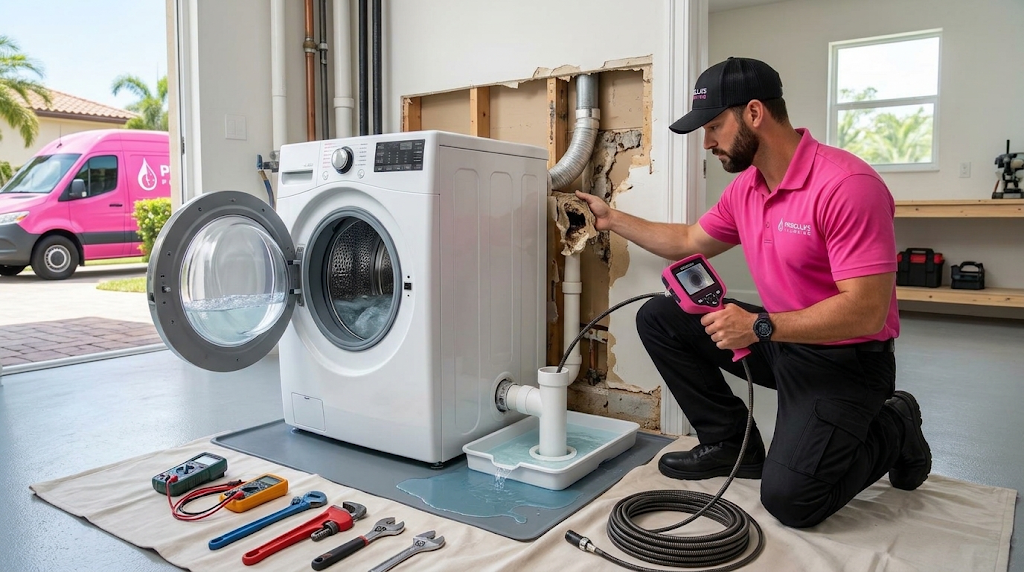
You start a load of laundry. But because drain cleaning (https://priscillaplumbing.com/services/drain-cleaning )is overdue, your washer hits the drain cycle. Then dirty water spills out of the wall pipe and floods your laundry room floor. Water pools under your washer and seeps into your drywall. Mold starts to grow on wet drywall within 24 to 48 hours, and South Florida humidity slows drying.
A full load uses 13 to 40 gallons of water, so one overflow soaks a lot of floor. The cause usually sits in your standpipe or your main sewer line. You do not need to guess. Let us show you the common causes, the fix for each one, and when to call a licensed plumber in South Florida. Read on and stop the overflow.
What Do Drain Cleaning Experts Say Causes a Washer Drain Overflow?
Your washing machine drain overflows because a clog in the standpipe or main sewer line blocks the fast flow of pumped water. The standpipe is the vertical pipe behind your washer where the drain hose connects. Your washer pumps out water fast, so the pipe must carry the water away at the same speed. A laundry drain clog slows the flow. The water then rises and spills out of the standpipe.
Five causes explain most overflows. Each cause has a fix. Turn off and unplug your washer before you start any of them.
1. A Blocked Main Sewer Line
Sometimes the problem sits deeper in your plumbing system.
A main sewer line carries wastewater away from your home. Tree roots, grease, debris, and other buildup might restrict this line. When your washer sends a large amount of water into the system, the blocked line struggles with the flow.
Look for other signs. Toilets, sinks, tubs, or floor drains might also drain slowly or back up.
If several fixtures show problems at the same time, the main sewer line clog deserves attention.
2. A Kinked or Poorly Placed Drain Hose
Check the flexible hose behind your washing machine.
A sharp bend or pinch might slow the water leaving the washer. The hose also should not sit too far inside the standpipe. A poor hose setup might restrict normal drainage.
Move the washer carefully and inspect the hose from end to end. Look for tight bends, crushed areas, or visible debris.
If the hose looks fine but the washing machine standpipe overflows, the blockage likely sits farther inside the drain system.
3. An Undersized or Poorly Set Standpipe
Older laundry plumbing sometimes does not handle the water flow from newer washing machines well.
A narrow drain gives wastewater less space to move. Standpipe height and proper drain setup also matter.
If overflow started after a washer replacement, the drain setup deserves inspection. A plumber should check the pipe size, connection, venting, and overall drain layout before changing the plumbing.
4. A Clogged Standpipe
The standpipe is the vertical drain pipe beside your washing machine. Fabric fibers, hair, soap residue, detergent buildup, and lint clog the drain line and often collect inside the pipe.
Over time, the opening inside the pipe gets smaller. Water then moves slowly. When your washer starts draining, the fast flow pushes water back toward the top.
If only your washing machine causes an overflow, start with the standpipe and nearby drain line. A local blockage often points to this area.
5. Too Much Detergent
Too much soap creates excess suds and residue.
Over time, soap buildup mixes with lint and fabric fibers. The material sticks inside the drain and narrows the path for water.
Follow your washer and detergent instructions. High-efficiency machines need HE detergent and a measured amount of soap. Using more detergent does not make clothes cleaner. It adds more residue to your plumbing.
What Should You Do When Your Washer Drain Overflows?
Start with these steps.
- Stop the washing machine.
- Turn off the washer water supply if water keeps entering the machine.
- Unplug the washer if the plug and floor area are dry and safe.
- Keep electrical equipment away from standing water.
- Remove visible water from the floor as soon as it is safe.
- Check the drain hose for a kink or pinch.
- Check the standpipe opening for visible debris.
- Avoid repeated wash cycles until the drain problem gets fixed.
A small hose problem might have a simple answer. A blocked standpipe or washer drain backing up needs proper drain cleaning. Avoid pouring harsh drain chemicals into the standpipe. These products often fail to clear deep or heavy blockages and leave chemicals inside the plumbing.
Try these fixes in order. Call a licensed plumber if water still spills after you clear the standpipe and check the hose. Also call if other drains run slow or if you smell a musty odor near your washer. Skip more loads until the drain clears, because each load adds 13 to 40 gallons of water to the problem.
Final Thoughts
A washing machine drain overflow is usually a sign of restricted drainage. Check the hose first. Then check the standpipe and nearby fixtures. If water keeps backing up, professional (drain cleaning) (https://priscillaplumbing.com/services/drain-cleaning ) gives you a clear path toward the right repair.
At (Priscilla Plumbing) (https://priscillaplumbing.com/ ), we make the process simple. One call connects you with a licensed and insured South Florida plumbing team, 24-hour support, same-day service, modern drain tools, and a free quote for your plumbing needs. We trace the clog, explain each step, and clear your drain with care. Your laundry room stays dry, and your paperwork stays in order.
Call us or schedule service online and get your laundry drain checked before the next overflow.
FAQ
Why does water come out of my washer standpipe?
A clog in the standpipe or your main sewer line blocks the flow. Your washer pumps water faster than the clogged pipe carries the water away.
How tall should a washing machine standpipe be?
Most standpipes need to stand at least 34 inches tall. The pipe also needs to be wide enough for modern washer pumps.
Should you keep washing clothes when the drain overflows?
No. Stop the load. Each load adds 13 to 40 gallons of water to your floor. Call a licensed plumber before you run another cycle.
How do you know if the clog sits in the main sewer line?
Check your other drains. Slow sinks, gurgling toilets, or backups in your tub point to your main line. Call Priscilla's Plumbing for a full inspection.