
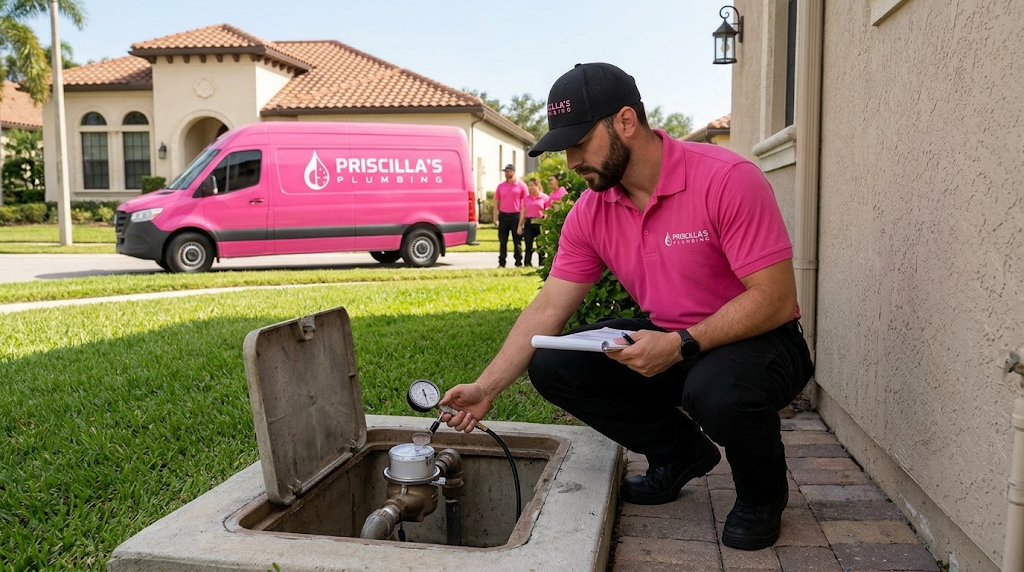
Your home is quiet. Every faucet is off. The shower is empty. No one is using the sink. Yet, your water meter keeps moving. This is a water leak detection (https://priscillaplumbing.com/services/water-leak-detection ) sign worth trying. When a water meter moves during a period with no water use, water is still passing through the meter.
A leak is often the reason. The source might be a toilet, appliance, hidden pipe, irrigation line, or another part of your plumbing system. In South Florida homes, hidden leaks also deserve quick attention because they often stay out of sight until water damage or a higher bill appears.
Hidden leaks also deserve quick attention because they often stay out of sight until water damage or a higher bill appears. A simple meter test helps you narrow down the source before calling a plumber.
What Does a Moving Water Meter Mean?
Your water meter tracks water flowing into your property. When every faucet and water fixture stays off, the meter should stay still during a true no-use period.
If the meter still moves, water is flowing somewhere.
A small movement does not mean you have a major leak. Still, you should not ignore ongoing movement. A slow leak often starts with little warning. Over time, the lost water adds up, and your bill rises.
Start by checking every known source of water use. Turn off faucets, showers, washing machines, dishwashers, ice makers, irrigation systems, and other automatic water devices. Then watch the meter.
For a simple water meter leak test, note the meter reading or watch the small flow indicator. Wait 30 to 60 minutes without using water. Check the meter again. A changed reading or moving indicator points to active water flow.
This test shows water movement, but it does not tell you the exact leak location.
5 Common Reasons Your Water Meter Keeps Moving
Water meters measure every drop entering your pipes. When the meter dial moves without open faucets, water escapes your system. Start with the easiest sources first.
1. A Leaking Toilet
A toilet often hides a water leak in plain sight.
A worn flapper inside the tank might fail to seal fully. Water then moves from the tank into the bowl. The flow might stay quiet enough to escape your notice.
Place a few drops of food coloring in the toilet tank. Do not flush. Wait 10 to 15 minutes. If colored water appears in the bowl, the toilet has a leak.
Check every toilet in your home. One small running toilet leak might keep the meter moving for hours.
2. A Water-Using Appliance
Some appliances use water without a faucet being turned on.
Your ice maker might refill after making ice. An irrigation system might run on a timer. A water heater valve or another automatic system might also create water flow.
Check your irrigation schedule and turn off known automatic water users before testing the meter again.
If the meter still moves after these sources are off, move on to the plumbing system.
3. A Hidden Pipe Leak
Water lines inside walls, under floors, beneath concrete, or underground might leak without leaving an obvious puddle.
Look for signs such as:
- An unexpectedly high water bill with no visible leak
- Damp spots on walls or floors
- Peeling paint
- Mold or mildew smells
- Warm or wet floor areas
- Unusual sounds near walls
- Lower water pressure
South Florida homes often have older plumbing systems. Aging pipes and underground water lines need careful inspection when a meter shows unexplained flow. Priscilla’s Plumbing provides water leak detection for hidden leaks, slab leaks, underground leaks, and leaks inside walls and ceilings.
4. Trapped Air or Changing Water Pressure
A leak indicator on a water meter might show irregular movement when air sits inside the water lines or when water pressure changes.
This type of movement often looks different from steady water use. The indicator might twitch or move for a short time instead of turning at a steady rate.
If you see repeated movement with no water use, keep testing. A plumber can help separate normal meter behavior from a real plumbing problem.
5. A Faulty Water Meter
A faulty meter is less common, but possible.
A mechanical meter might register flow when no water is moving through your plumbing system. Before blaming the meter, rule out toilets, appliances, irrigation, and hidden leaks.
If every source checks out and the meter still moves, contact your water provider or a licensed plumber for further testing.
Tests By Water Leak Detection Experts To Find Where the Water Is Going
Three tests find the source. Before you start, turn off every faucet, shower, dishwasher, and washing machine. Stop your irrigation timer too. Then read your meter and write down the number.
Check The Toilets
Add a few drops of food coloring to each toilet tank. Wait 10 to 15 minutes and do not flush. If color shows in the bowl, your flapper leaks. Replace the flapper and check your meter again.
Isolate The Shutoff Valves
Find the supply valve for each toilet, your water heater, and each appliance. Close one valve at a time. Watch your meter after each valve. If the meter stops, the fixture or appliance behind the valve has the leak. Keep the valve closed until a repair.
Test The Main Shutoff
Turn off the main indoor shutoff valve. Watch your meter. If the meter stops, the leak sits inside your home, in a wall, a slab, or a fixture. If the meter keeps spinning, the leak sits on the main supply line between the meter and your house. This line runs underground, so you need a licensed plumber with leak detection tools.
Write down what you see after each test. Then share your notes with your plumber. Clear notes speed up the repair.
Call a licensed plumber in these cases. The meter still moves after all three tests. You see wet spots or hear running water in a wall. The meter moves after you close the main shutoff. Do not dig or cut into a (slab leak detection) (https://priscillaplumbing.com/services/water-leak-detection) or wall yourself. Cutting in the wrong spot adds damage and cost.
Your Water Meter Is Giving You a Clue
If your water meter moves while every faucet is off, start with a simple check. If the meter still moves and you cannot find the source, call a professional water leak detection team immediately. A hidden leak inside a wall, under a slab, or along an underground water line needs the right tools and experience.
At (Priscilla Plumbing) (https://priscillaplumbing.com/ ), we hel South Florida homeowners find the source before a small leak turns into a larger plumbing problem. With same-day service, 24-hour support, advanced leak detection, licensed and insured professionals, free quotes, and a local team ready to explain your options, help starts with one simple call.
Call us today or visit us online to book your leak detection visit.
Frequently Asked Questions
How do I know if my water meter is showing a leak?
Look at the small dial or red triangle on your meter face. If every faucet is off and this indicator moves, water is leaking somewhere on your property.
Can a leaking toilet cause my water bill to go up?
Yes. A worn toilet flapper lets water run constantly from the tank into the bowl. This hidden leak can waste hundreds of gallons of water every single day.
Where do most hidden plumbing leaks happen in South Florida?
Most hidden leaks happen inside walls, under concrete slab foundations, or along the underground main supply pipe running between your water meter and home.
Will my water meter move if an appliance is running?
Yes. Automatic appliances like refrigerator ice makers, water softeners, and outdoor lawn irrigation timers pull water without you turning on a faucet.